Description
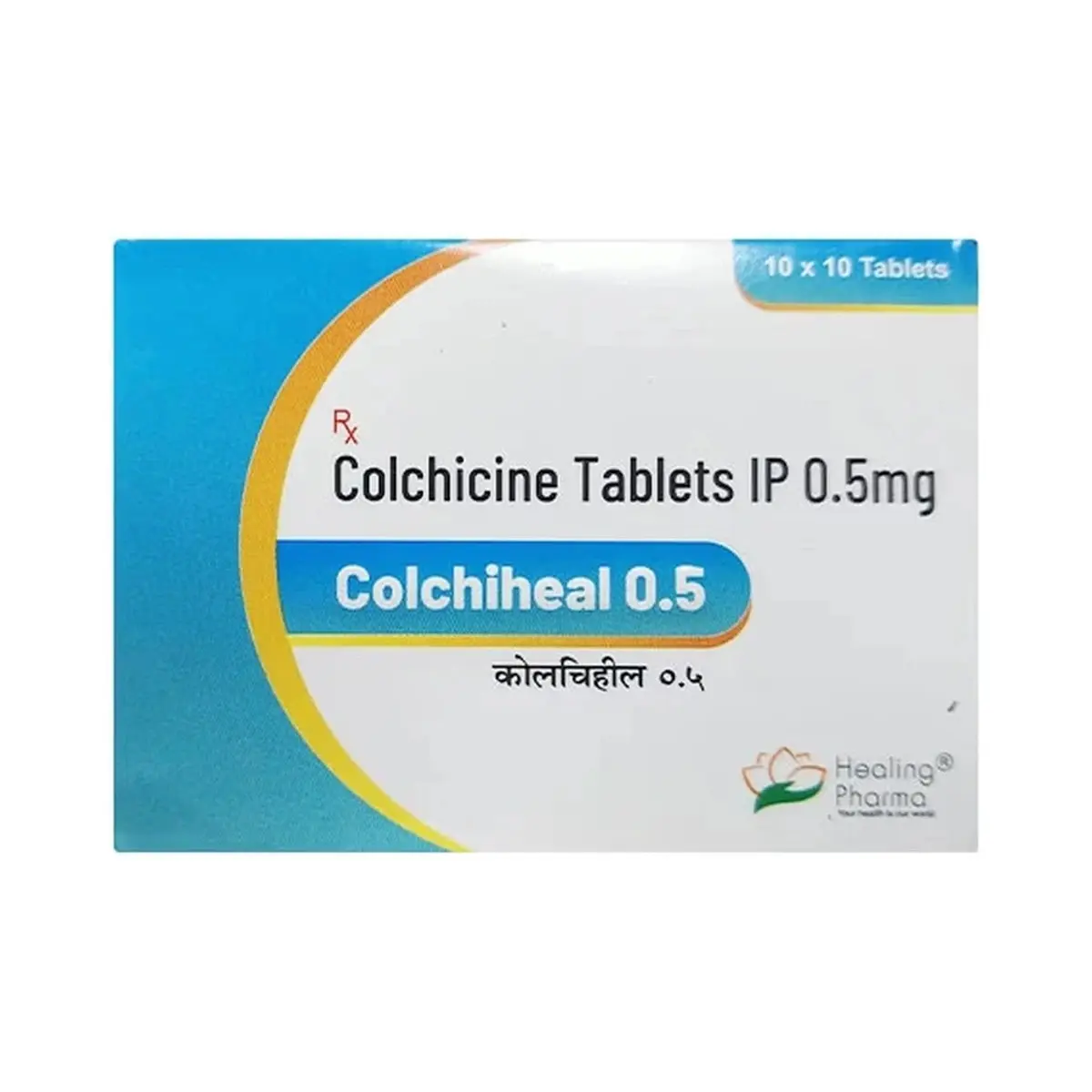
Colchiheal (Colchicine) 0.5 mg
Colchiheal is a colchicine medicine presented as an oral tablet. Colchicine is an established anti-inflammatory agent used mainly in gout and, in some regulatory labels, familial Mediterranean fever. The exact trade name should always be interpreted according to the local product licence and official leaflet.
Active Ingredient and Medicine Class
The verified active ingredient is colchicine. It belongs to the anti-gout and anti-inflammatory medicine class. Colchicine is a narrow-therapeutic-index medicine, meaning that the margin between effective and harmful exposure is relatively small.
Established Medical Uses
Official prescribing information for colchicine tablets supports use in prophylaxis of gout flares and treatment of acute gout flares. Some official labels also include treatment of familial Mediterranean fever in adults and children old enough for that indication.
For gout, colchicine is used to help reduce inflammatory flares linked to urate crystal deposition. It is not a pain medicine for symptoms caused by other conditions.
How It Works
Colchicine acts by disrupting microtubule assembly inside cells. This affects the movement and activity of inflammatory cells, especially neutrophils, and reduces several downstream inflammatory pathways. In gout, this helps limit the intense inflammatory response triggered by monosodium urate crystals.
Important Safety Information
Colchicine has important safety limitations because toxicity can occur if exposure becomes too high. It must be used cautiously in people with kidney or liver impairment. Serious harm has been reported when colchicine is taken with medicines that inhibit CYP3A4 or P-glycoprotein, because these interactions can markedly increase colchicine levels.
Official prescribing information lists contraindication with strong CYP3A4 or P-glycoprotein inhibitors in patients with renal or hepatic impairment. Interacting medicines may include certain macrolide antibiotics, azole antifungals, protease inhibitors, cyclosporine and some other agents. Colchicine can also interact with statins and other medicines that may contribute to muscle toxicity.
Other important warnings include blood dyscrasias, neuromuscular toxicity and rhabdomyolysis, and fatal overdose. Because of these risks, colchicine should be regarded as a carefully monitored prescription medicine rather than a routine anti-inflammatory product.
Possible Side Effects
The most common adverse effects are gastrointestinal, especially diarrhoea, nausea, vomiting and abdominal discomfort. These effects are often the earliest signs of intolerance.
More serious reactions can include myelosuppression, leukopenia, thrombocytopenia, pancytopenia, muscle injury, weakness, rhabdomyolysis, liver injury and severe systemic toxicity. Severe poisoning may be life-threatening.
Scientific Evidence
Clinical review evidence supports colchicine as an effective option for acute gout and for preventing gout flares, although the evidence base for acute treatment is not large and the safety margin is limited. A Cochrane review found low-quality evidence that low-dose colchicine is likely effective for acute gout, while another review described a broader anti-inflammatory mechanism involving neutrophil inhibition and inflammasome-related pathways.
Overall, the human evidence supports its established role in gout management, but also reinforces the need for careful attention to contraindications and drug interactions.
Medical Information Notice
This summary is based on official prescribing information and selected peer-reviewed literature available at the time of review. It is provided for educational purposes only and does not replace the official patient leaflet or an individual assessment by a qualified healthcare professional.
Medical Sources
- U.S. DailyMed / FDA label Colchicine tablets, full prescribing information. View official prescribing information
- Irene van Echteld et al. Colchicine for acute gout. Cochrane Database of Systematic Reviews, 2014. View scientific article
- Nicola Dalbeth et al. Mechanism of action of colchicine in the treatment of gout. Clinical Therapeutics, 2014. View scientific article