Description
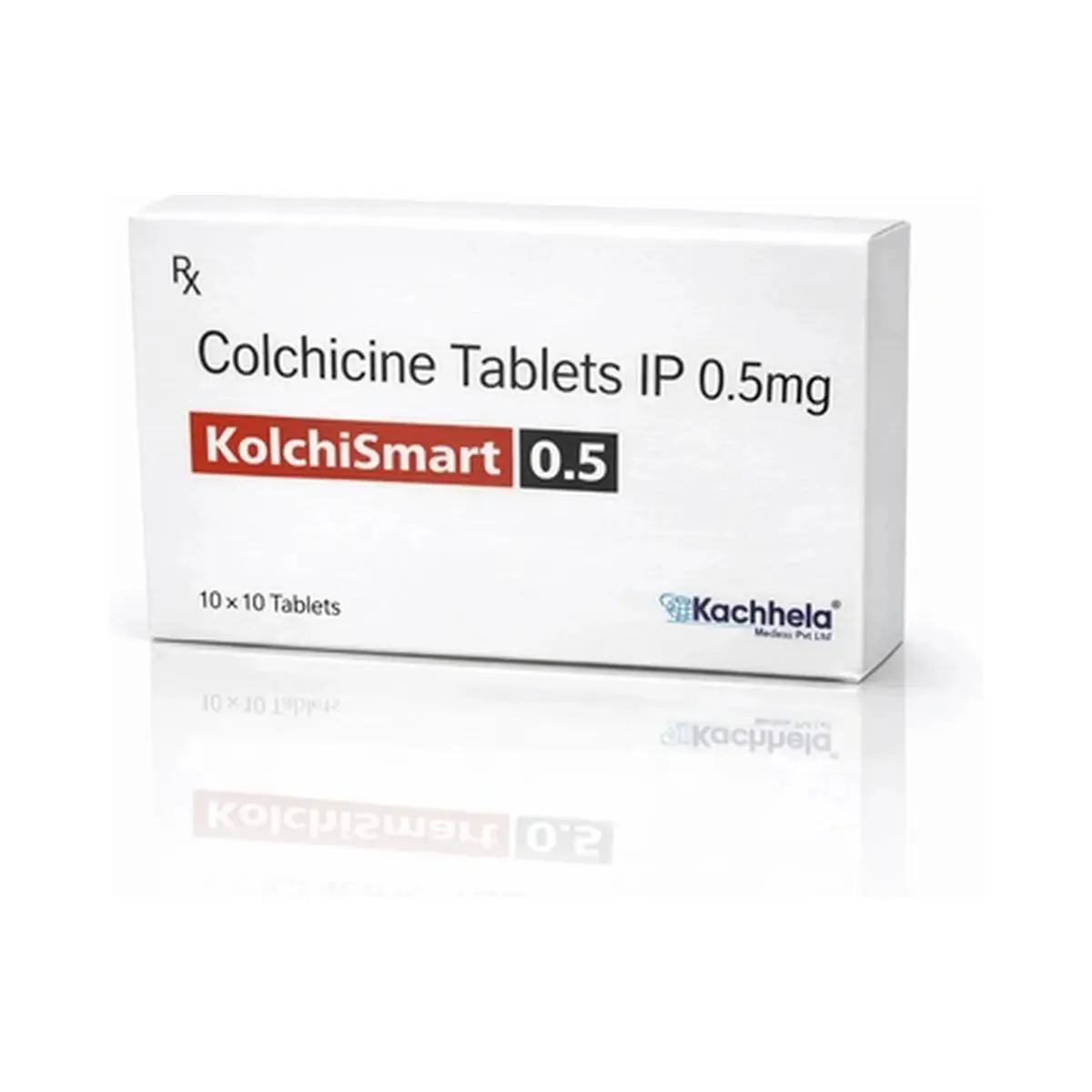
Kolchismart (Colchicine) 0.5 mg
Kolchismart 0.5 mg is a tablet medicine containing colchicine. Based on authoritative prescribing information for colchicine products, it is an established anti-inflammatory medicine used mainly in gout and familial Mediterranean fever. The product name itself was not independently verified as a specific international brand, so this description is based on the confirmed active ingredient and tablet strength.
Active Ingredient and Medicine Class
The active ingredient is colchicine, an anti-inflammatory agent with a long history of use in crystal-related and autoinflammatory diseases. It is not a painkiller in the usual sense and does not lower uric acid levels. Its effects are linked to suppression of inflammatory cell activity, especially neutrophil-driven inflammation.
Established Medical Uses
Colchicine is established for the prophylaxis of gout flares, the treatment of acute gout flares, and the treatment of familial Mediterranean fever in adults and in appropriate paediatric patients, depending on the regulatory label. In some jurisdictions, colchicine has also been studied or authorised for selected cardiovascular indications, but those uses depend on the exact product and country-specific approval status.
In gout, colchicine is used because it can reduce the inflammatory response triggered by urate crystals. In familial Mediterranean fever, it is used to reduce recurrent inflammatory attacks and help prevent long-term complications such as amyloidosis.
How It Works
Colchicine interferes with microtubule formation inside cells. This limits the movement and activation of inflammatory cells, especially neutrophils, and reduces several downstream inflammatory signals. In practical terms, it helps calm the acute inflammation that occurs in gout and the recurring inflammatory episodes seen in familial Mediterranean fever.
Important Safety Information
Colchicine has a narrow safety margin, so clinically important interactions and organ-function issues matter. It should not be used in combination with certain strong CYP3A4 or P-glycoprotein inhibitors in patients with renal or hepatic impairment because severe or fatal colchicine toxicity has been reported. Important interacting medicines include some macrolide antibiotics, azole antifungals, protease inhibitors, cyclosporine and related agents.
Precautions are also needed in people with kidney or liver impairment, older adults, and those at increased risk of muscle toxicity or blood-count abnormalities. Toxicity can be serious if colchicine is taken in excess or if drug interactions increase exposure.
Possible Side Effects
The most commonly reported adverse effects are diarrhoea, abdominal pain, nausea and vomiting. These are often dose-limiting.
More serious reactions can include blood disorders such as low white blood cells or low platelets, muscle toxicity including rhabdomyolysis, and severe systemic toxicity in the setting of overdose or major drug interactions. Any unexpected weakness, severe gastrointestinal symptoms, or signs of infection warrant urgent medical attention.
Scientific Evidence
Human studies and reviews support colchicine as an effective anti-inflammatory option in gout and familial Mediterranean fever. Randomised trial data in acute gout show that lower-dose colchicine can provide benefit while reducing adverse effects compared with older high-dose regimens. Reviews of familial Mediterranean fever describe colchicine as the mainstay of long-term control and note its role in preventing attacks and reducing the risk of AA amyloidosis.
Scientific literature also discusses colchicine’s broader anti-inflammatory mechanism and its possible role in selected cardiovascular settings, but such uses should be considered separately from its established gout and familial Mediterranean fever indications.
Medical Information Notice
This page is an educational summary based on sources available at the time of review. It does not replace the official patient leaflet, the full prescribing information, or an individual assessment by a qualified healthcare professional.
Medical Sources
- U.S. National Library of Medicine / DailyMed. Colchicine tablet: Full prescribing information
- European Medicines Agency. Colchicine product-specific bioequivalence guidance
- Robert A. Terkeltaub et al. High versus low dosing of oral colchicine for early acute gout flare: Twenty-four-hour outcome of the first multicenter, randomized, double-blind, placebo-controlled, parallel-group, dose-comparison colchicine study. Arthritis & Rheumatism, 2010. View scientific article
- Tristan Pascart et al. Colchicine in Gout: An Update. Current Pharmaceutical Design, 2018. View scientific article
- Mordechai Shohat and Gabrielle J. Halpern. Familial Mediterranean fever–a review. Genetics in Medicine, 2011. View scientific article