Description
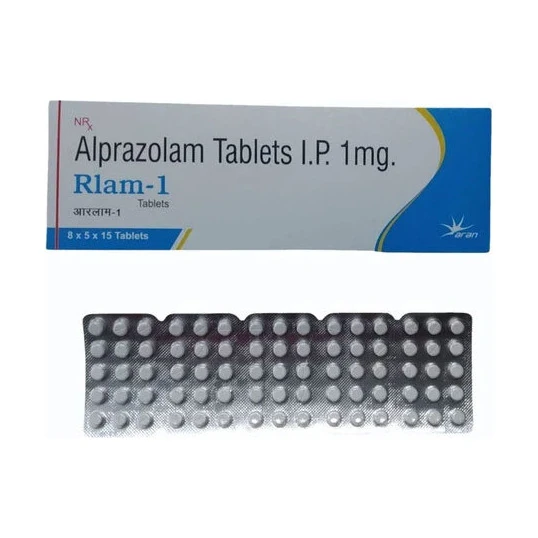
Rlam (Alprazolam) 1 mg
Rlam 1 mg is an alprazolam tablet for oral use. Alprazolam is a prescription benzodiazepine medicine used for short-term treatment of anxiety symptoms and for panic disorder in adults. The 1 mg strength identifies the tablet amount of active ingredient and does not indicate a recommended dose.
Active Ingredient and Medicine Class
The verified active ingredient is alprazolam. It belongs to the benzodiazepine class of medicines, which act on the central nervous system and produce anxiolytic, sedative, muscle-relaxant, and anticonvulsant effects. Alprazolam is considered a high-potency benzodiazepine.
Established Medical Uses
Official prescribing information identifies alprazolam as a treatment for acute generalized anxiety disorder in adults and for panic disorder with or without agoraphobia in adults. Clinical use is generally limited to the shortest appropriate duration because the medicine can lead to physical dependence and withdrawal symptoms.
How It Works
Alprazolam enhances the effect of gamma-aminobutyric acid, or GABA, the main inhibitory neurotransmitter in the brain. By strengthening GABA’s calming action, it can reduce excessive nervous system activity associated with anxiety and panic symptoms. This mechanism also explains why alprazolam may cause drowsiness and slowed reaction time.
Important Safety Information
Alprazolam should not be used in people with known hypersensitivity to alprazolam or other benzodiazepines. It is also contraindicated with strong CYP3A inhibitors, such as ketoconazole and itraconazole, because these medicines can raise alprazolam levels significantly.
Important precautions include the risk of abuse, misuse, dependence, and withdrawal reactions, which may include severe symptoms and seizures. The risk is greater with higher daily exposure and longer use. Caution is also needed with opioids, alcohol, and other central nervous system depressants because combined use can increase sedation and respiratory depression.
Additional caution is advised in older adults and in people with liver impairment, who may be more sensitive to the effects of benzodiazepines. People taking alprazolam may also experience impaired alertness and coordination.
Possible Side Effects
Common adverse effects include drowsiness, fatigue, dizziness, reduced alertness, and problems with coordination. Some people may also experience memory impairment, slowed thinking, or slurred speech.
More serious reactions can include severe sedation, confusion, depression of breathing when combined with other depressants, allergic reactions, paradoxical agitation, and withdrawal symptoms after stopping or reducing the medicine too quickly.
Scientific Evidence
Clinical studies and reviews support alprazolam’s effectiveness for short-term management of panic disorder and anxiety symptoms in adults. A randomized-trial meta-analysis found alprazolam to be effective for panic disorder, but not clearly superior to other benzodiazepines. A later review highlighted that while alprazolam is widely used, its clinical benefits must be balanced against misuse potential, dependence, and withdrawal concerns.
Medical Information Notice
This page is an educational summary based on sources available at the time of review. It does not replace the official patient leaflet, full prescribing information, or individual assessment by a qualified healthcare professional.
Medical Sources
- FDA. XANAX (alprazolam) tablets, for oral use, CIV. View official prescribing information
- DailyMed. Alprazolam tablet label. View official medicine label
- S Kasper et al. Panic disorder: the place of benzodiazepines and selective serotonin reuptake inhibitors. Eur Neuropsychopharmacol, 2001. View scientific article
- Nassima Ait-Daoud et al. A Review of Alprazolam Use, Misuse, and Withdrawal. J Addict Med, 2018. View scientific article