Description
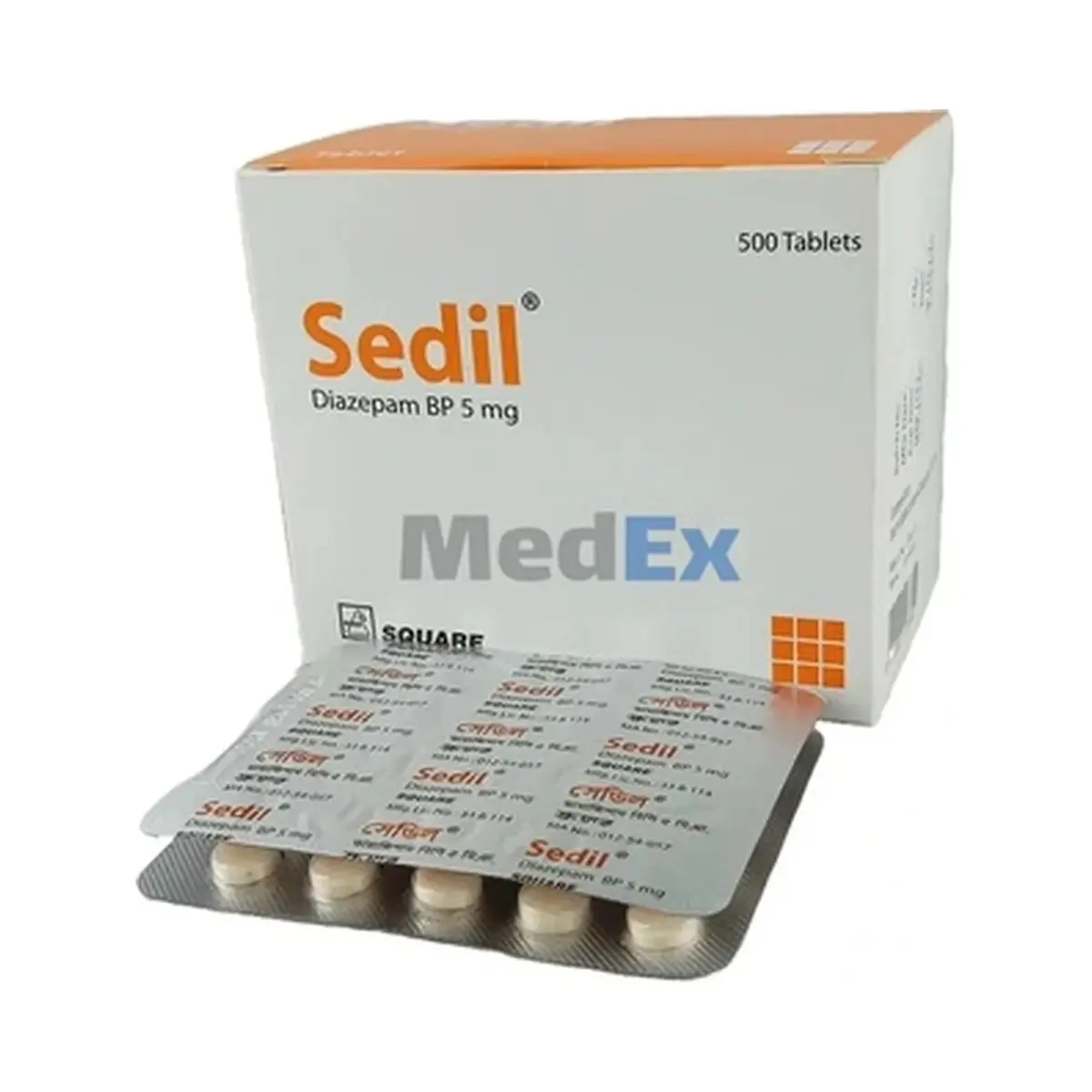
Sedil (Diazepam) 5 mg
Sedil 5 mg is a diazepam tablet, a prescription benzodiazepine medicine. Diazepam is used in a range of short-term clinical settings where calming, muscle-relaxing, or anticonvulsant effects may be needed. The exact product name “Sedil” could not be independently verified from the sources reviewed, but the active ingredient diazepam and the tablet strength are consistent with official prescribing information for diazepam tablets.
Active Ingredient and Medicine Class
The verified active ingredient is diazepam. It belongs to the benzodiazepine class of medicines, which act on the central nervous system and produce anxiolytic, sedative, anticonvulsant, and muscle-relaxant effects. Diazepam is a long-established medicine with multiple approved and documented clinical uses.
Established Medical Uses
Official prescribing information describes oral diazepam as a medicine used for short-term relief of severe anxiety in some settings, and as a treatment that may be used for muscle spasm due to different causes. It is also used as an adjunct in certain seizure disorders, and in some jurisdictions for alcohol withdrawal or procedural premedication. The most relevant listed uses for this product description are anxiety-related symptoms and muscle spasm.
How It Works
Diazepam enhances the effect of gamma-aminobutyric acid, or GABA, the main inhibitory neurotransmitter in the brain. By strengthening GABA’s calming action, diazepam can reduce excessive nervous system activity. This helps explain its effects on anxiety, muscle tension, and some seizure-related conditions.
Important Safety Information
Diazepam should not be used in several conditions, including known hypersensitivity to diazepam or other benzodiazepines, myasthenia gravis, severe respiratory insufficiency, sleep apnoea, and severe hepatic insufficiency. Official product information also lists acute narrow-angle glaucoma as a contraindication.
Important precautions include the risk of dependence, tolerance, misuse, and withdrawal, especially with prolonged use. Abrupt discontinuation after continued use can cause withdrawal symptoms, which may be serious. Diazepam can also worsen sedation and breathing problems when combined with opioids, alcohol, or other central nervous system depressants. Caution is also advised in patients with a history of substance misuse, depression, liver disease, or frailty.
Possible Side Effects
Common adverse effects of diazepam include drowsiness, fatigue, dizziness, unsteadiness, and impaired concentration. Some people may also experience confusion or muscle weakness. Less common but more serious reactions can include excessive sedation, breathing depression, paradoxical agitation, memory problems, and dependence-related symptoms. In overdose or when combined with other depressant medicines, the risk of severe sedation and respiratory depression increases.
Scientific Evidence
Clinical research supports diazepam’s anxiolytic effect in short-term anxiety states. A meta-analysis of randomized trials found diazepam more effective than placebo for anxiety symptoms, although the authors cautioned that interpretation should remain careful and that benefit depends on context and duration of treatment. For muscle spasm, review literature supports a possible role for diazepam as an oral centrally acting muscle relaxant, but also notes that sedating adverse effects are common and can limit tolerability.
Medical Information Notice
This page is an educational summary based on official and scientific sources available at the time of review. It does not replace the official patient leaflet, prescribing information, or assessment by a qualified healthcare professional.
Medical Sources
- DailyMed Diazepam Tablet Prescribing Information. View official prescribing information
- Medicines and Healthcare products Regulatory Agency / electronic Medicines Compendium Diazepam 2 mg Tablets SmPC. View official product information
- Inada T, Nozaki S, Inagaki A, Furukawa TA. Efficacy of diazepam as an anti-anxiety agent: meta-analysis of double-blind, randomized controlled trials carried out in Japan. Human Psychopharmacology, 2003. View scientific article
- Oral antispastic drugs in nonprogressive neurologic diseases: a systematic review. PubMed-indexed systematic review, 2004. View scientific article