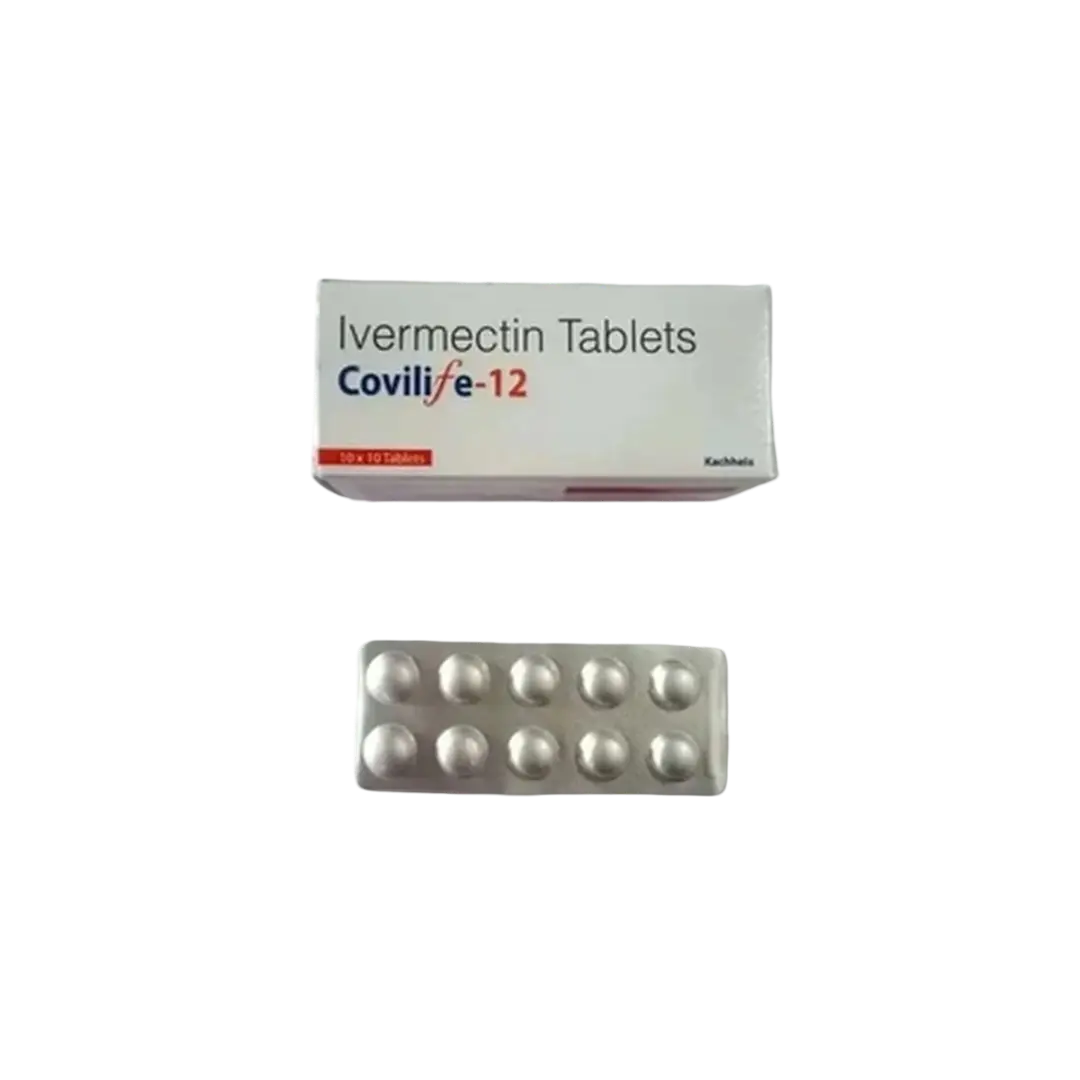
Description
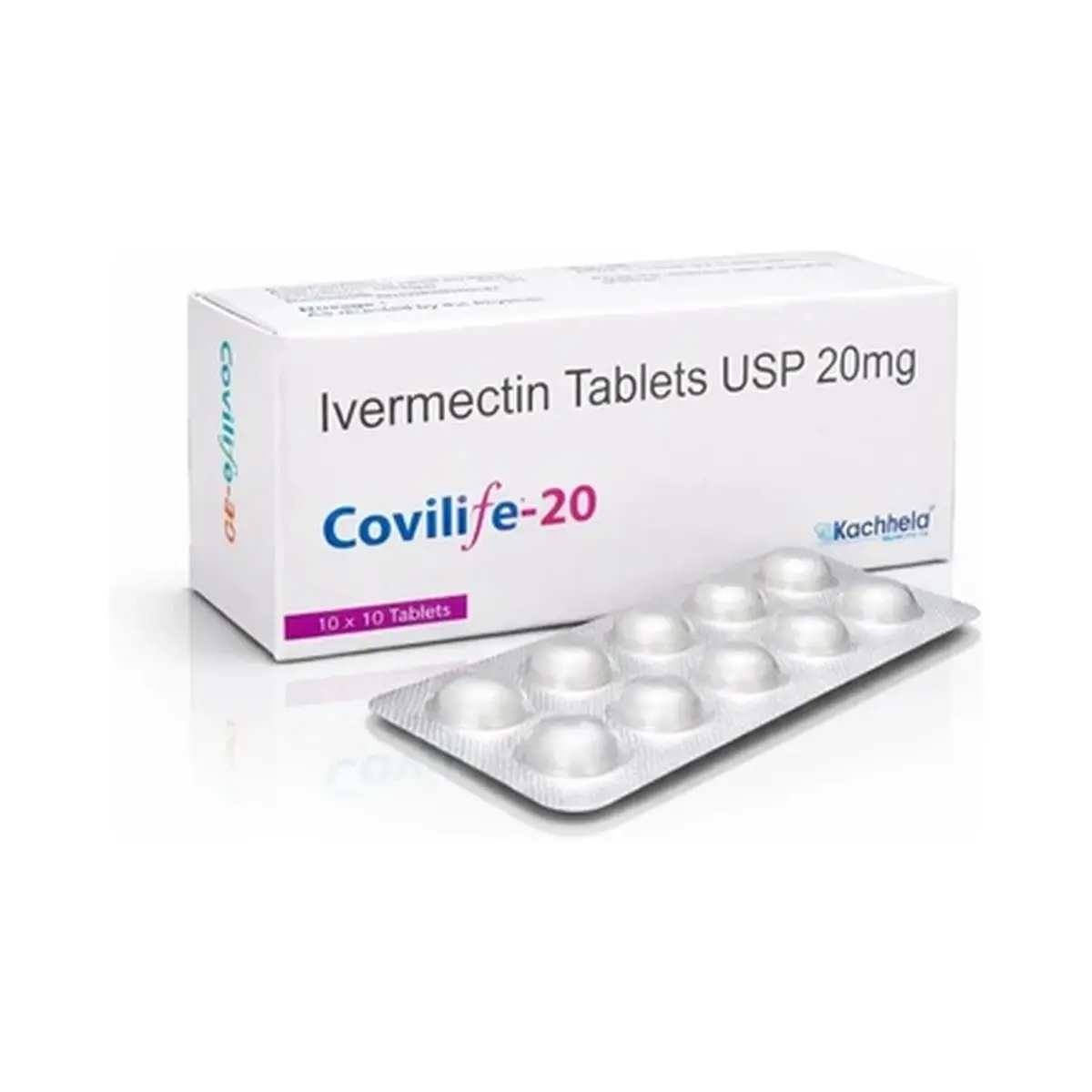
Covilife (Ivermectin) 12 mg
Covilife is a branded oral tablet product identified here as containing ivermectin 12 mg. Ivermectin is an antiparasitic medicine used in human medicine for selected parasitic infections, with approved oral tablet products in the same active ingredient class available in regulatory sources.
Active Ingredient and Medicine Class
Active ingredient: ivermectin.
Medicine class: antiparasitic agent; an anthelmintic. It is a semisynthetic macrocyclic lactone.
Established Medical Uses
Official oral ivermectin products are used for intestinal strongyloidiasis caused by Strongyloides stercoralis, and some approved products also include onchocerciasis (river blindness) due to Onchocerca volvulus. PubMed reviews also describe ivermectin as an important treatment for certain other parasitic diseases, but those broader uses should be distinguished from formal product labeling.
How It Works
Ivermectin acts on parasite nerve and muscle function by increasing chloride ion conductance through parasite-specific channels, which leads to paralysis and death of susceptible parasites. This mechanism helps explain its activity against certain nematodes and related parasites.
Important Safety Information
Ivermectin is contraindicated in people with known hypersensitivity to the medicine or any tablet component. Regulatory labeling also warns about neurotoxicity, including confusion, altered consciousness, stupor, coma, and death, reported in some patients. In onchocerciasis, inflammatory reactions related to dying microfilariae may occur; patients with heavy Loa loa infection have a recognised risk of serious encephalopathic reactions. Clinically important interaction concerns include drugs that may increase ivermectin exposure or affect P-glycoprotein transport, and caution is warranted when ivermectin is used with other centrally acting medicines.
Possible Side Effects
Reported adverse effects include dizziness, nausea, diarrhoea, pruritus, rash, and fatigue. In onchocerciasis, skin and eye reactions may reflect the infection and the inflammatory response to treatment. Serious reactions are uncommon but can include severe neurological effects and marked hypersensitivity-type reactions.
Scientific Evidence
Clinical and review literature supports ivermectin as an effective antiparasitic medicine, particularly for strongyloidiasis and onchocerciasis. Human studies and reviews also document that its established benefits are specific to susceptible parasitic infections, while evidence for broader non-parasitic uses is not established in regulatory labeling.
Medical Information Notice
This summary is based on sources available at the time of review and is for educational purposes only. It does not replace the official patient leaflet or assessment by a qualified healthcare professional.
Medical Sources
- DailyMed / FDA labeling: Ivermectin Tablets, USP
- FDA: STROMECTOL (ivermectin) tablets, prescribing information
- Fischer PU, Weinkopff T, et al. Ivermectin in human medicine, an overview of the current status of its clinical applications (International Journal for Parasitology, 2011)