Description
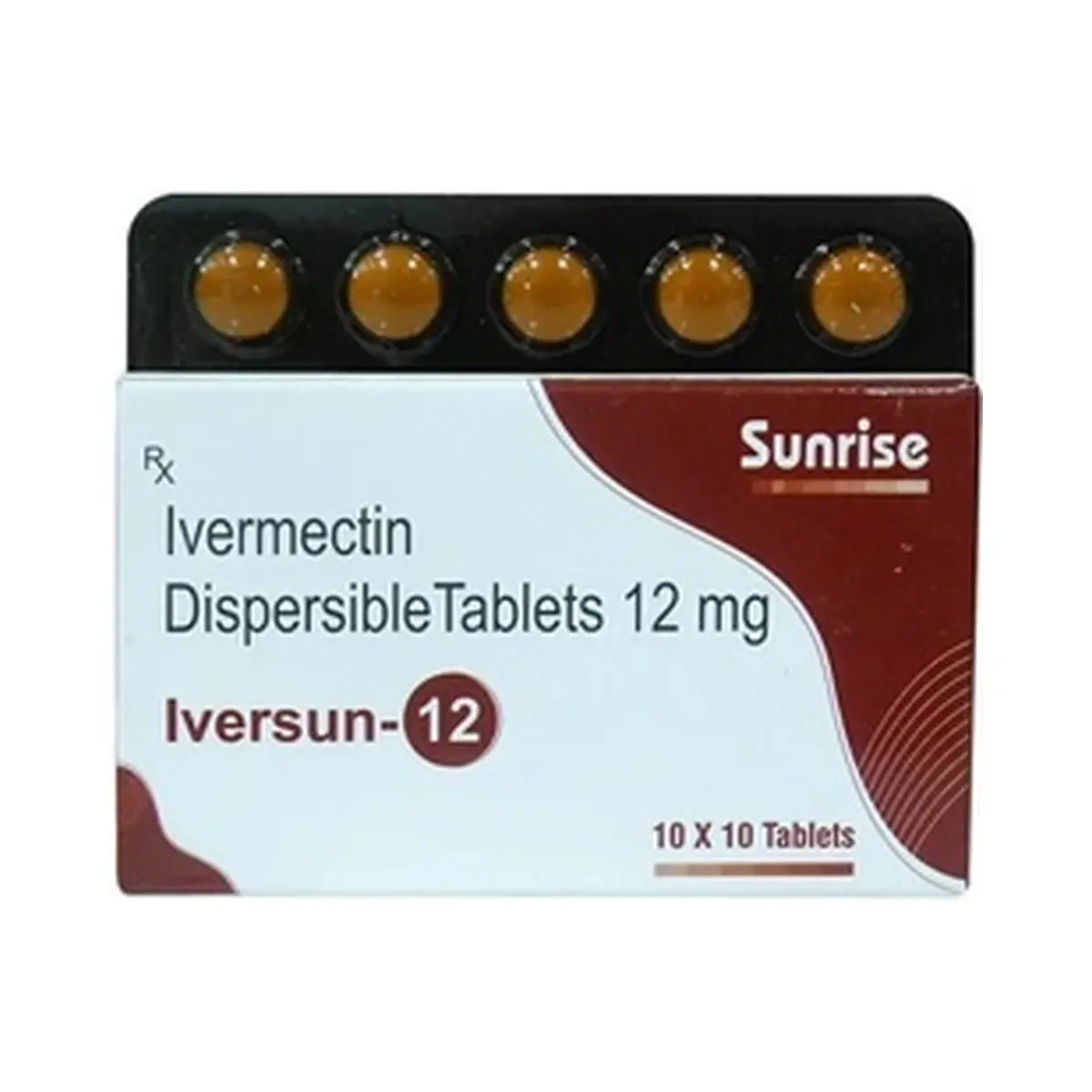
Iversun (Ivermectin) 12 mg dt
Iversun (ivermectin) 12 mg dt is a dispersible oral medicine containing ivermectin, an antiparasitic agent used against certain nematode infections. The verified active ingredient is ivermectin. The tablet form described here is intended for oral use, and the “dt” label is commonly used to indicate a dispersible tablet formulation.
Active Ingredient and Medicine Class
Ivermectin belongs to the avermectin class of broad-spectrum antiparasitic medicines. It is an endectocidal agent, meaning it is active against some internal and external parasites. In established human medicine, ivermectin is used primarily as an anthelmintic and microfilaricidal medicine.
Established Medical Uses
Official prescribing information for oral ivermectin tablets identifies two established indications in humans: intestinal strongyloidiasis caused by Strongyloides stercoralis, and onchocerciasis caused by Onchocerca volvulus. In onchocerciasis, ivermectin reduces microfilariae but does not kill the adult worms, so infection control may require follow-up management under medical supervision.
Clinical literature also discusses ivermectin in other parasitic conditions, including scabies and some filarial infections. However, not every such use is an official labeled indication for every product, country, or formulation. When used outside the approved label, evidence and local guidance should be considered carefully.
How It Works
Ivermectin acts by binding selectively to glutamate-gated chloride channels in invertebrate nerve and muscle cells. This increases chloride movement across the parasite cell membrane, causing paralysis and death of the parasite. The medicine has lower affinity for mammalian chloride channels and does not readily cross the blood-brain barrier in humans, which helps explain its selective antiparasitic activity.
Important Safety Information
Oral ivermectin is contraindicated in people with known hypersensitivity to the product or any of its components. Prescribing information warns that treatment of onchocerciasis may trigger inflammatory reactions related to the death of microfilariae, including skin, systemic, and eye reactions. Serious neurologic reactions have also been reported, particularly in certain settings, including some patients with heavy Loa loa infection exposure. Clinicians may assess this risk before treatment when relevant.
Important interactions and precautions include a reported increase in INR when ivermectin has been co-administered with warfarin. Use in pregnancy is not established in official labeling, and the product should be used with caution in breastfeeding and in very small children according to labeling restrictions. Immunocompromised patients with strongyloidiasis may require repeat treatment because cure can be more difficult to achieve.
Possible Side Effects
Reported adverse effects include fatigue, abdominal pain, dizziness, diarrhoea, nausea, pruritus, rash, and other gastrointestinal or skin symptoms. In onchocerciasis, adverse reactions may also reflect the body’s response to dying parasites and can include itching, rash, swollen lymph nodes, joint pain, fever, and eye symptoms. Rare but serious reactions such as confusion, altered consciousness, seizures, or coma have been reported and require urgent medical attention.
Scientific Evidence
Human clinical studies support ivermectin’s activity against strongyloidiasis and onchocerciasis, and broader review literature describes it as a well-established antiparasitic medicine with a long record of human use. Review and trial evidence also supports its role in some scabies regimens, although outcomes vary by comparator, population, and treatment setting. Research into additional uses exists, but experimental or preliminary findings should not be treated as proven clinical benefit without stronger human evidence.
Medical Information Notice
This page is an educational summary based on sources available at the time of review. It does not replace the official patient leaflet, regulatory product information, or assessment by a qualified healthcare professional.
Medical Sources
- U.S. Food and Drug Administration STROMECTOL (ivermectin) Tablets, official prescribing information. View official label
- DailyMed Ivermectin Tablets, USP, official drug label. View official prescribing information
- P González et al. Ivermectin in human medicine, an overview of the current status of its clinical applications. Current Pharmaceutical Biotechnology, 2012. View scientific article
- Ahmed Abu-Zaid et al. Efficacy and safety of oral ivermectin versus benzyl benzoate for the treatment of scabies: a systematic review and meta-analysis of randomized controlled trials. Frontiers in Medicine, 2025. View scientific article