Description
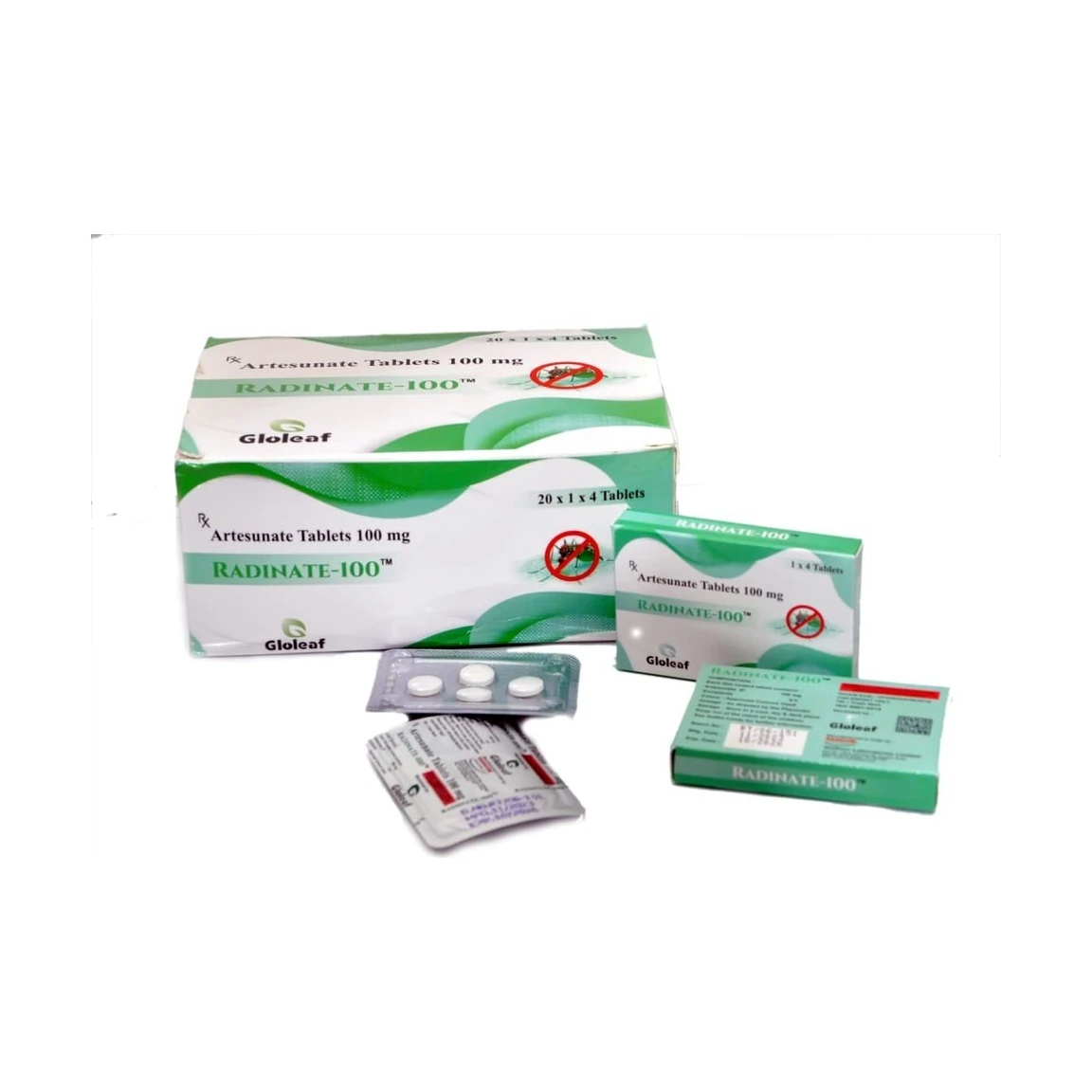
Radinate (Artesunate) 100 mg
Radinate 100 mg is presented here as an artesunate oral tablet. Artesunate is a fast-acting antimalarial medicine in the artemisinin class. It is used against malaria parasites, especially Plasmodium falciparum, and it acts quickly to reduce parasite levels in the blood.
Active Ingredient and Medicine Class
The verified active ingredient is artesunate. It belongs to the artemisinin derivative class of antimalarial medicines. Artesunate is a prodrug that is rapidly converted in the body to its active metabolite, dihydroartemisinin (DHA).
Established Medical Uses
Artesunate is used in malaria treatment, particularly where rapid parasite clearance is needed. Public health guidance recognises artesunate as part of antimalarial therapy for P. falciparum malaria, including severe disease managed initially with parenteral artesunate followed by a full oral antimalarial regimen when the patient can take medicine by mouth.
WHO guidance also states that oral artemisinin medicines, including artesunate, should not be used alone because monotherapy can contribute to resistance. In practice, artesunate is generally used within combination treatment strategies rather than as a stand-alone long-term regimen.
How It Works
Artesunate kills malaria parasites during the blood stage of infection. After conversion to DHA, it damages parasite proteins and other essential structures through a mechanism involving an endoperoxide bridge that is activated by iron inside the parasite. This leads to rapid parasite death and a fast fall in parasite burden.
Important Safety Information
Important safety considerations include hypersensitivity to artesunate or related artemisinin medicines. Because artesunate can interact with other medicines, prescribers review co-administered drugs carefully, especially medicines that affect liver enzymes or transport proteins and other antimalarials. WHO also warns against the use of oral artemisinin monotherapy because of the risk of promoting resistance.
For severe malaria, artesunate is used as part of a broader treatment pathway rather than as a complete treatment by itself. As with all antimalarials, clinical supervision is important because the underlying infection itself can become life-threatening.
Possible Side Effects
Reported adverse effects with artesunate include nausea, vomiting, abdominal discomfort, headache, dizziness, fever, rash, and changes in blood counts such as reduced reticulocyte count or leukopenia. Serious reactions are uncommon but may include hypersensitivity reactions. In malaria treatment, some symptoms may also reflect the illness rather than the medicine itself.
Scientific Evidence
Human studies show that oral artesunate is absorbed rapidly and converted quickly to DHA, producing prompt antimalarial activity. Clinical reviews describe artesunate as a rapidly acting agent with established utility in malaria treatment. Scientific literature also notes that oral artesunate has a short residence time in the body, which is one reason it is generally used in combination-based strategies rather than as isolated monotherapy.
Medical Information Notice
This page is an educational summary based on sources available at the time of review. It does not replace the official patient leaflet, local prescribing information, or assessment by a qualified health professional.
Medical Sources
- World Health Organization. WHO guidelines for malaria. View official guideline ([who.int](https://www.who.int/publications/i/item/guidelines-for-malaria/?utm_source=openai))
- U.S. Food and Drug Administration. Artesunate for Injection, prescribing information. View official prescribing information ([accessdata.fda.gov](https://www.accessdata.fda.gov/drugsatfda_docs/label/2023/213036s004lbl.pdf?utm_source=openai))
- Barradell LB et al. Artesunate. A review of its pharmacology and therapeutic efficacy in the treatment of malaria. Drugs, 1995. View scientific article ([pubmed.ncbi.nlm.nih.gov](https://pubmed.ncbi.nlm.nih.gov/8536555/?utm_source=openai))
- Li Q, Weina P. Artesunate: The Best Drug in the Treatment of Severe and Complicated Malaria. Pharmaceuticals, 2010. View scientific article ([pubmed.ncbi.nlm.nih.gov](https://pubmed.ncbi.nlm.nih.gov/27713355/?utm_source=openai))
- Ehret MJ et al. Review of the clinical pharmacokinetics of artesunate and its active metabolite dihydroartemisinin following intravenous, intramuscular, oral or rectal administration. Malaria Journal, 2011. View scientific article ([pubmed.ncbi.nlm.nih.gov](https://pubmed.ncbi.nlm.nih.gov/21914160/?utm_source=openai))